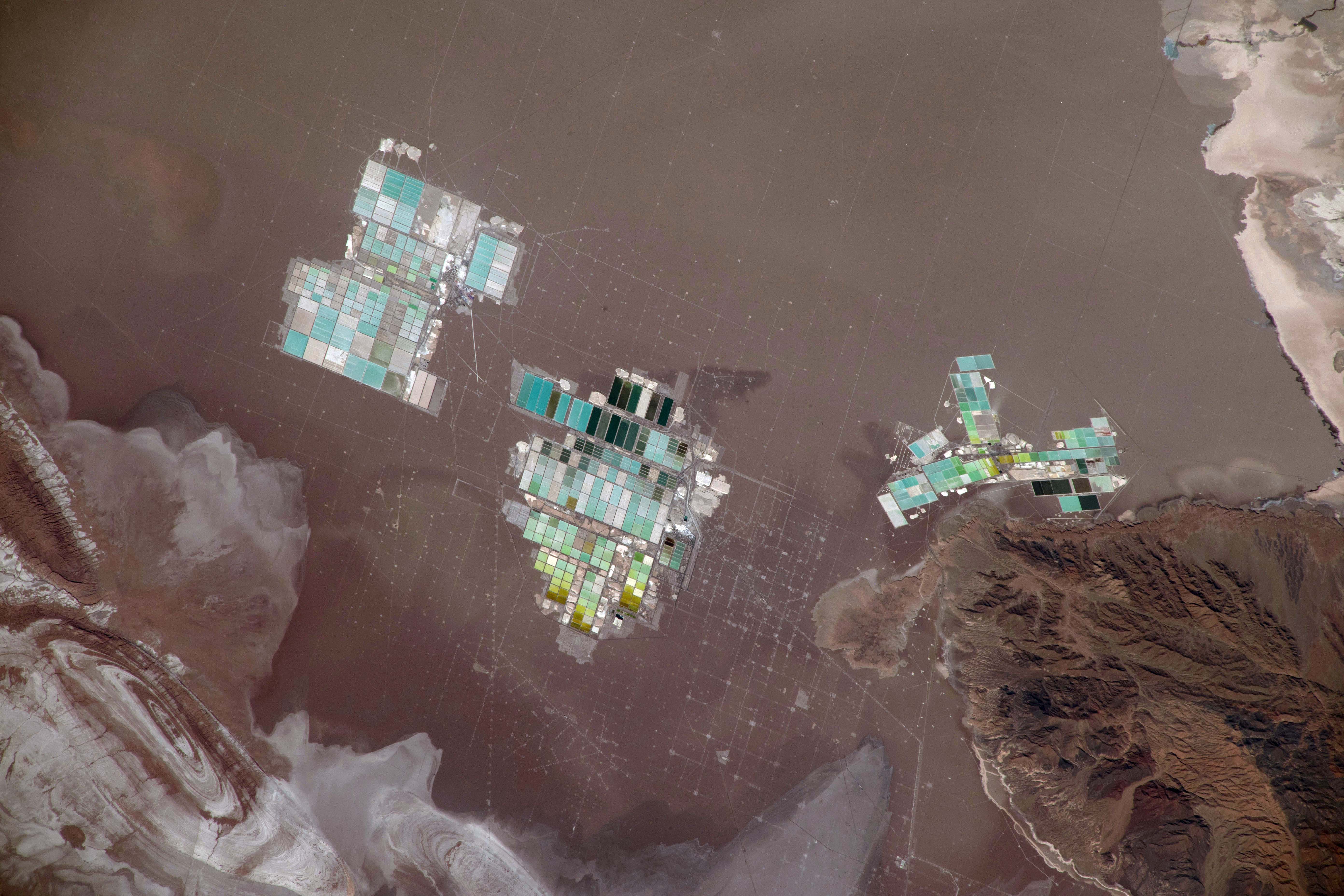
The future of technology depends on physical supply chains: materials extracted, processed to specification and delivered when manufacturers need them.
The U.S.–Argentina Andes–Atlantic Corridor brings that operating challenge into focus. Its strategic significance will depend on how financing and infrastructure translate into reliable capacity.
Resources create potential. Execution determines whether that potential reaches the customer.
What has been announced.
On September 23, 2026, EXIM announced a framework with Argentina to mobilize up to $7 billion in financing through 2027. Its scope includes critical minerals development and processing, energy, grid modernization, digital connectivity and other strategic sectors. Cooperation may support the deployment of U.S. equipment, technology and expertise. EXIM announcement [1]
That distinction matters: a financing framework is different from approved transactions, disbursed funds or commissioned assets.
Source: EXIM, September 23, 2026. Not capital already deployed.
BBC reporting published by G1 describes the corridor’s infrastructure ambitions, including connections between resource-producing regions and export markets. It highlights oil and gas alongside lithium and copper. BBC / G1 reporting [4]
The corridor should therefore be evaluated as a broader infrastructure and supply-chain initiative. The materials reviewed do not establish a specific Argentine rare-earth project.
Different materials.
Different industrial requirements.
Lithium, copper and rare earths should not be treated as interchangeable inputs.
Lithium is used in rechargeable batteries. Copper supports electrical systems. Rare-earth elements include materials used in high-performance permanent magnets. Their applications overlap within technology ecosystems, but their processing requirements and commercial markets differ. USGS overview [3]
For an executive evaluating supply, “critical minerals” is a starting category. The operating assessment needs to identify the material, required grade, customer specification and complete production route.
A battery-material supplier and a magnet manufacturer need different capabilities. A successful infrastructure investment must serve those specific requirements.
Why rare earths provide
a useful comparison.
Rare earths are not necessarily scarce in the Earth’s crust. Economically viable concentrations are less common, and their chemical similarities make separation difficult.
The IEA’s 2026 report illustrates the industrial concentration: in 2024, China accounted for 60% of mining and 91% of refining for magnet rare earths, plus 94% of sintered permanent magnet production. These figures concern particular supply-chain segments, not all critical minerals. IEA report [2]
China’s global share, 2024. Source: IEA, Rare Earth Elements (2026). Scale: 0–100%.
The operating implication is straightforward: developing another source of raw material does not automatically create an independent route to finished components.
This comparison explains a broader diversification challenge. It is not evidence that the Argentine corridor will deliver rare-earth processing or magnet production.
The investment case needs
a complete delivery chain.
My interpretation is that the corridor’s value should be assessed through the constraints it can remove.
A deposit may be commercially attractive while its route to market remains inadequate. Transport improvements may increase access while processing remains the limiting factor. A processing facility may be technically capable but lack reliable utilities or sufficient customer demand.
An executive review should connect these dependencies before committing capital.
For each proposed project, I would ask:
- Which customer requirement does it serve?
- Which constraint does it remove?
- Which upstream and downstream assets must also operate?
- Who owns each interface?
- What evidence supports the expected demand and operating cost?
The priority should be the constraint that limits reliable delivery—not necessarily the asset with the most visible construction activity.
Financing is a sequence of decisions.
The announced financing ceiling is useful context, but project-level economics require more detail.
A review would examine financing approval, conditions precedent, repayment terms, currency exposure and the timing of disbursements. Procurement and construction commitments must align with that timing.
A delay between expenditure and revenue can change working-capital needs. A facility that reaches mechanical completion before its supporting infrastructure is ready may incur costs without producing saleable output.
These are general project risks, not findings about the corridor’s actual contracts.
The practical response is to release capital against defined milestones and verify that dependent assets remain on schedule.
Five milestones.
Evidence of execution.
| Milestone | Evidence to request | Decision it informs |
|---|---|---|
| Financing | Approved transactions, conditions and actual disbursements. | Whether procurement and construction can proceed. |
| Infrastructure | Commissioning evidence and demonstrated operating capacity. | Whether the production route is usable. |
| Processing | Yield, uptime, consistency and saleable output during ramp-up. | Whether capacity is technically and operationally credible. |
| Customer qualification | Accepted specifications, qualification results and purchase commitments. | Whether output can enter the intended market. |
| Delivered economics | Cost, lead time and reliability across the complete route. | Whether the supply is commercially competitive. |
These are proposed evaluation criteria, not reported project achievements.
Nameplate capacity should be distinguished from actual output. Actual output should be distinguished from customer-qualified supply. The distinctions determine whether a project can contribute to a manufacturer’s sourcing strategy.
Diversification needs to reach
beyond geography.
My operating view is that supplier location alone is an incomplete measure of resilience.
A manufacturer may buy from a new country while remaining dependent on the same processor, equipment supplier or transport route. That arrangement can diversify one risk while leaving another concentrated.
A useful assessment maps dependencies through the chain and tests disruption scenarios: processing interruption, delayed transport, utility constraints or a failure to meet specifications.
The commercial question becomes: how much additional cost is justified by a demonstrable improvement in continuity?
That answer depends on the customer’s exposure, alternative suppliers and cost of interruption. It should not be assumed from a geopolitical announcement.
Three execution outcomes
to consider.
Infrastructure advances, processing lags.
Resources gain a better route to export, but downstream dependency remains. Evaluate the benefits achieved while identifying the remaining constraint.
Capacity is delivered, customer qualification lags.
The project can produce material, but access to the intended market remains incomplete. Focus on technical consistency, qualification and the cash required during ramp-up.
The complete route becomes reliable.
Financing, infrastructure, processing and qualified demand align. Evaluate delivered cost and performance before treating the route as a scalable alternative.
These are analytical scenarios, not forecasts or assigned probabilities.
What this means for businesses.
Potential opportunities extend across equipment, engineering, utilities, logistics and processing. Their viability depends on specific projects, procurement requirements and contracts.
For suppliers, the next useful evidence is an identifiable customer, funded scope and achievable delivery requirement.
For manufacturers, it is qualified output with dependable lead times.
For investors and project sponsors, it is a sequence of milestones connecting capital deployed to commercial operation.
The operating outcome.
The Andes–Atlantic Corridor provides a timely case for examining the physical foundations of technology and industrial growth.
Its success should be measured through the capacity it delivers and the constraints it removes. Announced financing, resource access and strategic alignment are inputs. Reliable, customer-qualified supply is the operating outcome.
The executive question is whether the complete chain can deliver the right material, at the right quality, cost and time.
This analysis draws on public announcements and reporting. It does not audit project contracts, financing approvals, production performance or customer qualification. The evaluation framework and scenarios are independent interpretation.
The three-slide visual brief.
Context photographs, supply concentration and the operating question.
Download the slide imagesSources.
- EXIM — U.S.–Argentina Build the Future Framework
- IEA — Rare Earth Elements, 2026
- USGS — Critical Minerals
- BBC News / G1 — Andes–Atlantic Corridor
Independent analysis by Renan Yared. No affiliation with or endorsement by the organizations discussed.